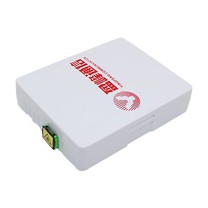
1. pre-set on the fiber optic cable splicing parts with steel wire heat-shrinkable tubing;
2. remove the coating layer, with the clamping vertically clamped fiber, and quickly stripped 20mm - 30mm long primary coating and secondary coating layer, with alcohol-soaked cotton balls or lens paper wipe the fiber, wipe the core clean to avoid cracks and scratches on the fiber surface.
3.cut the fiber and make the end face. In the fiber optic splicing, the most critical process, is the production of fiber endface. The perfection of the fiber end face or not determines the loss of fiber splicing. Fiber endface not only need to end flat, showing a smooth and flat mirror area, no burr, no defects, and axis perpendicular, but also need to keep the endface clean, to avoid dust pollution.
There are three methods for making the end face as follows: First, the scoring method. Using a mechanical cutting knife, use a diamond knife to score the surface in the direction perpendicular to the fiber, 10㎜ away from the coating layer, gently bounce touch, the fiber in the location of this score natural fracture. Second, cutting pliers method, it is the use of a homemade handheld simple pliers for cutting operations. The third is the ultrasonic electric cutting method. These three methods as long as the apparatus is excellent, proper operation, the preparation of the end face are very good results.
4.the two optical fibers to be spliced into the fusion splicing machine, by the fusion splicing machine automatically for fusion splicing.
5.with OTDR instrumentation for splicing performance testing and evaluation, in line with the splicing indicators, and then the splicing part of the reinforcement protection, that is, hot melt the heat shrinkable tube with steel wire.
6. finally, in all fiber core splicing is completed, the income intake tray, OTDR instrumentation for re-testing, failed to re-accommodation or re-connected, until qualified. Single-mode fiber splicing loss indicator is generally 0.08dB. in construction, according to the actual situation, but generally are not greater than 0.08dB.
Fiber optic splice loss is due to the splice point imperfection, affecting the splice point imperfection of many factors, summarized in two categories, namely, external and internal factors.
Internal factors are the imperfection of the fiber itself, can not improve the splicing process to reduce the loss, it includes core diameter mismatch, refractive index distribution mismatch, poor concentricity of the fiber, mode field diameter mismatch, so in the splicing test, the splicing loss value will appear large positive and negative phenomenon. Through multiple splicing can only make the one-way value smaller, the average value tends to zero, but the positive and negative phenomenon can not be avoided, the positive and negative phenomenon has a certain impact on the fiber transmission loss. In the project, the fiber optic cable distribution plate should try to use the same batch of factory fiber optic cable, A, B end as much as possible one by one correspondence, to a certain extent can reduce the splicing loss.
External factors are not the fiber itself is not perfect, but the splicing process caused by poor. External factors have strict requirements for splicing personnel. Core position lateral, longitudinal, fiber axial angle deviation, fiber end contamination and other phenomena, is caused by the splicing process, such as untimely maintenance of the fusion splicer, improper operation and other human factors.
Finally, it should also be noted that the heat shrink tube should also be clean, clean, dust-free, or hot fusion, dust damage to the splice point, causing increased loss. Collected to the shelter plate, try to collect into a large circle, to avoid the small circle caused by the increased loss. Optical fiber in the shelter plate to use tape to make it fixed, can not appear on the trend of spring, to avoid future damage.