Zhejiang Yingfeng Optical Communication Technology Co., Ltd
+86-574-89065025
 LanguageLanguage
Tel: +86-574-89065023/25
Email: Frank@nhyingfeng.com
Add: No.11 Huanyuan Road, Binhai Industrial Zone, Xidian Town, Ningbo, China
Company Strength
Yingfeng Optical Communications was founded in 1982. After years of rapid and sustained development, it currently has Yingfeng Modern Industrial Park with a production area of 35,000 square meters.
Professional Team
We have a professional team to provide you with comprehensive one-stop services. Professional manufacturer, 100% tested. We have first-class production lines and strict quality management systems.
Our Certificate
ISO9001:2015,CE, ROHS,UL,ANATEL
Rich Experience
We have 40 years of experience in this field. We are a professional supplier you can trust
What is SC Connector
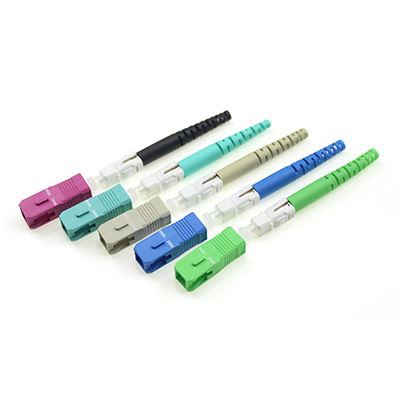
The SC connector features a snap-in design with a push-pull latching mechanism that is easy to connect and disconnect. The SC uses a 2.5 mm ceramic ferrule for performance and durability, the same as ST, FC, FDDI, and ESON connectors. The square shape makes the design of the SC more compact and easier to use than its predecessors; however, it is larger than the LC connector which followed it.


Compact Design: SC Connector are tight and have a small form factor, making them ideal for high-density applications.
Bidirectional Transmission: Typically used in pairs, SC Connector enable bidirectional data transmission.
Retaining Tab Mechanism: With a design similar to RJ45 and telephone jacks, SC Connector are easy to connect and disconnect thanks to their retaining tab mechanism.
Ceramic Ferrule: The use of a ceramic ferrule ensures precise alignment of the fiber, promoting high-quality signal transmission.
Maintenance: Ensuring the cleanliness and integrity of the SC Connector is crucial for optimal performance and signal quality.
Wide Usage: Due to their reliable performance, SC Connector see widespread use in telecommunication networks, data processing networks, and cable television networks, among others.
Compatibility: SC Connector are compatible with both single-mode and multimode fibers, offering versatility in diverse applications.
Standardization: The SC Connector meets the standards set by TIA/EIA-604-10, ensuring its quality and performance.
Internet and Local Area Networks (LANs)
SC Connector allow for greater bandwidth compared to other cable options. Common uses for networking include fiber optics for delivering internet and LAN connectivity throughout a building. SC Connector works especially well over distances greater than 90 meters and when carrying gigabit-speed connections. Both LAN and high-speed internet use multimode SC Connector.
Community Antenna TV (CATV) and Other Telecommunications
Community antenna TV and other telecommunications companies often prefer SC Connector to deliver their signals due to the lower cost over long distances with less loss and higher bandwidth compared to older technologies. Additionally, each transmitter and receiver pair of fibers can carry more voice and video signals. Compared to wire delivery methods, fiber optics can go 100 times farther and more than 1,000 times faster. CATV may use single-mode fiber optic cabling for its higher bandwidth and lower loss.
Digital Telephone Service
Telephony is another system that benefits from SC Connector use. Like CATV, many digital telephone applications use single-mode fiber cable. In fact, in the business world, telephony is one of the top uses for SC Connector.
Public Utility Networks
Public utilities, such as electrical companies or municipal water treatment facilities, use fiber optics in several ways. They may have fiber optic connected closed-circuit TV (CCTV) security cameras and a network connecting various sites to provide real-time data on operations. Electrical companies, for instance, recognized the interference of their production and distribution equipment on traditional communications wires and made an early switch to fiber optics.
History
The LC is the younger counterpart of SC, which is globally dispersed, but LC is catching up. They have taken the same family values with regard to their insertion loss (0.25-0.5 dB) and return loss functions. It mainly depends on where in the network you will need to make use of the connector, independent of SC or LC, even the variant-specific types of connector.
Ferrule Size
A 'ferrule' is a small tube or a mechanical device placed at the end of the connector to safeguard fiber. SC connector has a 2.5mm ferrule while LC has a 1.25mm ferrule, which is half of SC's. The small size of the LC connector makes it more frequently used when there are 'pools' of fiber optic cables close to one another, including offices and data centers.

Mechanism
The SC connector works with a push-pull mechanism, which means that it would be put or driven when you press down something instead of turning or pushing against the direction. However, the LC connector works using a latch, replacing the pierce method for its simplicity and miniaturization so that it has higher demand.
Cost
Compared to SC connectors, the cost of LC connectors is higher due to their complicated and innovative design. SC connectors can be more cost-effective as they have a relatively simple construction and mature technology.
Durability
The two fiber optic connectors have equal capacity for the insertion loss (signal or data packets of 0.25 to 0.5db) and return loss values and perform well for very high speeds and long-lasting connection durability.But they have different mating cycles. The lifespan of SC connectors is 1000 mating cycles, while that of LC connectors is 500 mating cycles.
SC Connector Components
The Fiber Ferrule
SC connector is built around a long cylindrical 2.5mm diameter ferrule, made of ceramic (zirconia) or metal (stainless alloy). A 124~127um diameter high precision hole is drilled in the center of the ferrule, where stripped bare fiber is inserted through and usually bonded by epoxy or adhesive. The end of the fiber is at the end of the ferrule, where it typically is polished smooth.
The Connector Sub-assembly Body
The ferrule is then assembled in the SC sub-assembly body which has mechanisms to hold the cable and fiber in place. The end of the ferrule protrudes out of the sub-assembly body to mate with another SC connector inside a mating sleeve (also called adapter or coupler).
The Connector Housing
Connector sub-assembly body is then assembled together with the connector housing. Connector housing provides the mechanism for snapping into a mating sleeve (adapter) and hold the connector in place.
The Fiber Cable
Fiber cable and strength member (aramid yarn or Kevlar) are crimped onto the connector sub-assembly body with a crimp eyelet. This provides the strength for mechanical handing of the connector without putting stress on the fiber itself.
The Stress Relief Boot
Stress relief boot covers the joint between connector body and fiber cable and protects fiber cable from mechanical damage. Stress relief boot designs are different for 900um tight buffered fiber and 1.6mm~3mm fiber cable.
Types
According to different classification categories, optical fiber connector can be classified into various types. By polish type, there are PC, UPC, APC. By fiber types, there are single mode and multimode. By fiber count, there are simplex and duplex. The commonly used optical fiber connectors are LC, MPO/MTP, SC, FC, ST, MT-RJ and etc.
Specifications
Before taking into this question, we must know that there are two primary specifications of all fiber connectors: Insertion loss and return loss. To pick up a good optical connector, customers should take the following features into consideration.
Personal Requirements
Apart from the above factors, you also take your own needs into consideration. For example, here are some questions you may ask yourself while choosing an optical fiber connector? Where to apply this connector? How much can I offer for a cost-effective connector? Is there any extra functional performance need for my fiber optic network system?
Step 1: Gather the Necessary Tools and Materials
Before you begin the termination process, make sure you have all the required tools and materials ready:SC fast connector,Fiber optic cable (single-mode or multi-mode, as per your requirement),Fiber cleaver,Fiber stripping tool,Fiber cleaning supplies (lint-free wipes and fiber cleaning solution),Epoxy or adhesive (depending on the type of SC fast connector being used),Polishing film (for polishing the connector),Polishing puck or fixture (for holding the connector during polishing),Fiber inspection microscope or visual fault locator (VFL).
Step 2: Prepare the Fiber Cable
Strip the outer jacket: Use the fiber stripping tool to remove the outer jacket of the fiber cable, exposing the individual fiber(s). Be careful not to nick or damage the fibers during this process.Remove the buffer coating: Once the fiber(s) are exposed, use the fiber stripping tool again to remove the buffer coating, leaving the bare fiber(s) ready for termination. The length of the exposed fiber should match the length required by the SC fast connector.Clean the fiber(s): Wipe the bare fiber(s) with a lint-free wipe and fiber cleaning solution to remove any dust, oil, or contaminants. Cleanliness is essential for ensuring a successful termination.
Step 3: Cleaving the Fiber
Place the fiber into the cleaver: Insert the prepared fiber into the cleaver, aligning it carefully to ensure a perpendicular cleave.Score the fiber: Lower the cleaver blade to score the fiber's surface gently. Be cautious not to apply excessive force to prevent any cracks or chips on the fiber.Complete the cleave: Apply a controlled force to complete the cleave. A clean and smooth cleave is critical for achieving low-loss connections.
Step 4: Installing the SC Fast Connector
Open the connector: If you are using a pre-polished SC fast connector, open the connector housing and carefully insert the cleaved fiber into the connector ferrule. Ensure the fiber is fully seated and protruding slightly from the ferrule's end.Apply epoxy or adhesive (if required): If you are using an SC fast connector that requires epoxy or adhesive, apply a small amount to the connector ferrule before inserting the cleaved fiber. Follow the manufacturer's guidelines for the specific epoxy or adhesive being used.Cure the epoxy (if applicable): If you used epoxy, follow the curing instructions to ensure a secure bond between the fiber and the connector.
Before you connect a SC Connector to a device or another cable, you should inspect the end face of the connector for any contamination or damage. You can use a microscope or a handheld inspection probe to magnify the connector surface and check for any defects. If you find any dirt, dust, oil, or moisture, you should clean the connector with a lint-free wipe and a suitable solvent. If you find any scratches, cracks, or chips, you should replace the connector or the cable.
After you disconnect a SC Connector from a device or another cable, you should also clean the end face of the connector before storing it or reusing it. This will prevent any contamination from transferring to other connectors or devices. You can use the same method as before, or you can use a one-click cleaner that has a spring-loaded tip that pushes dust and dirt away from the connector surface.
When you store SC Connector and connectors, you should protect them from dust, moisture, and mechanical stress. You should use dust caps to cover the connectors and prevent any exposure to air or water. You should also coil the cables loosely and avoid any sharp bends or kinks that can damage the fibers. You should store the cables and connectors in a dry and cool place, away from heat sources, chemicals, or direct sunlight.
When you handle SC Connector and connectors, you should be gentle and avoid any excessive force or pressure. You should not twist, pull, or bend the cables beyond their minimum bend radius, which is typically 10 times the cable diameter. You should also not touch the connector end face with your fingers or any hard or sharp objects that can scratch or chip the surface. You should wear gloves and eye protection when working with SC Connector and connectors, as they can cause cuts or eye injuries.
Yingfeng Optical Communication takes "promoting the spirit of craftsmanship and creating high-quality optical communication" as its mission, "becoming a world-renowned manufacturer ofoptical communication equipment" as its vision, "committing to Asia and facing the world" as its strategic policy, and "serving customers is for us" as its management. Philosophy, continuous innovation and advancement with the times.


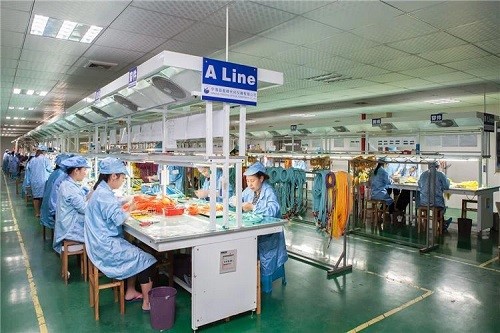


As one of the most professional sc connector manufacturers and suppliers in China since 1982, we're featured by quality products and good service. If you're going to wholesale discount sc connector, welcome to get quotation from our factory.
(0/10)